
What to see in Samarcanda, Uzbekistan: An indispensable guide to the jewel of the Silk Road
Samarkand, one of the oldest cities in Central Asia, is a name that evokes images of camel caravans, fine silk and blue dome mosques. It was the epicenter of the Silk Route and capital of the vast empire of Tamerlán, who made it the architectural jewel that is today. If you love history, architecture and culture, Samarkand is a destiny you can’t miss.
In this guide, we take you on a trip through the most spectacular places in the city, optimized to plan your visit and make the most of your experience.
Map sites to see in Samarkand, Uzbekistan
Organization by day in Samarkand, Uzbekistan
Although I later explain the places to see, if you take into account the map, I recommend the route we make. We believe that to see Samarkand, two days is enough. Having said that, we were in summer, which is when there are more hours of sun, although we had plenty of time left.
Every day, we saw the following:
- Day 1:
- Tomorrow:
- Registan Square.
- Then we go to Tashkent Road, where the rest of the points are to visit: Mosque of Bibi-Khanym and Bazaar of Siyob. After seeing these points we ate next to the mosque.
- Afternoon:
- Hazrat Khizr Mosque.
- Makhsum Baba Mausoleum. He’s next to Hazrat Khizr but the day we went was closed and we couldn’t visit him.
- Shah-i-Zinda.
- Night:
- Night light show on Registan Square.
- Tomorrow:
- Day 2:
- We went to Taxi (with the Yandex Go app, the Uber there) to the points far from the center that are next to the University Boulevard:
- Tomorrow:
- Aksaray Mausoleum.
- Gur- e Amir.
- Rukhobod Mausoleum.
- Monument of Amir Temur. Then we got Yandex Go to see the next point.
- Afternoon:
- Ulugbek Observatory.
- Ulugbek Statue. From there, we also caught Yandex Go to see the last point we saw, although we believe it was not worth it in tourist terms.
- Mausoleum of San Daniel. It’s a huge grave and it’s got a cemetery going up a few stairs. The cemeteries there are curious because in vertical stones of the tombstones a picture of when the dead were alive appears.
- Tomorrow:
- We went to Taxi (with the Yandex Go app, the Uber there) to the points far from the center that are next to the University Boulevard:
Below are the main sites to see in Samarkand:
Plaza Registan: The heart of Samarkand
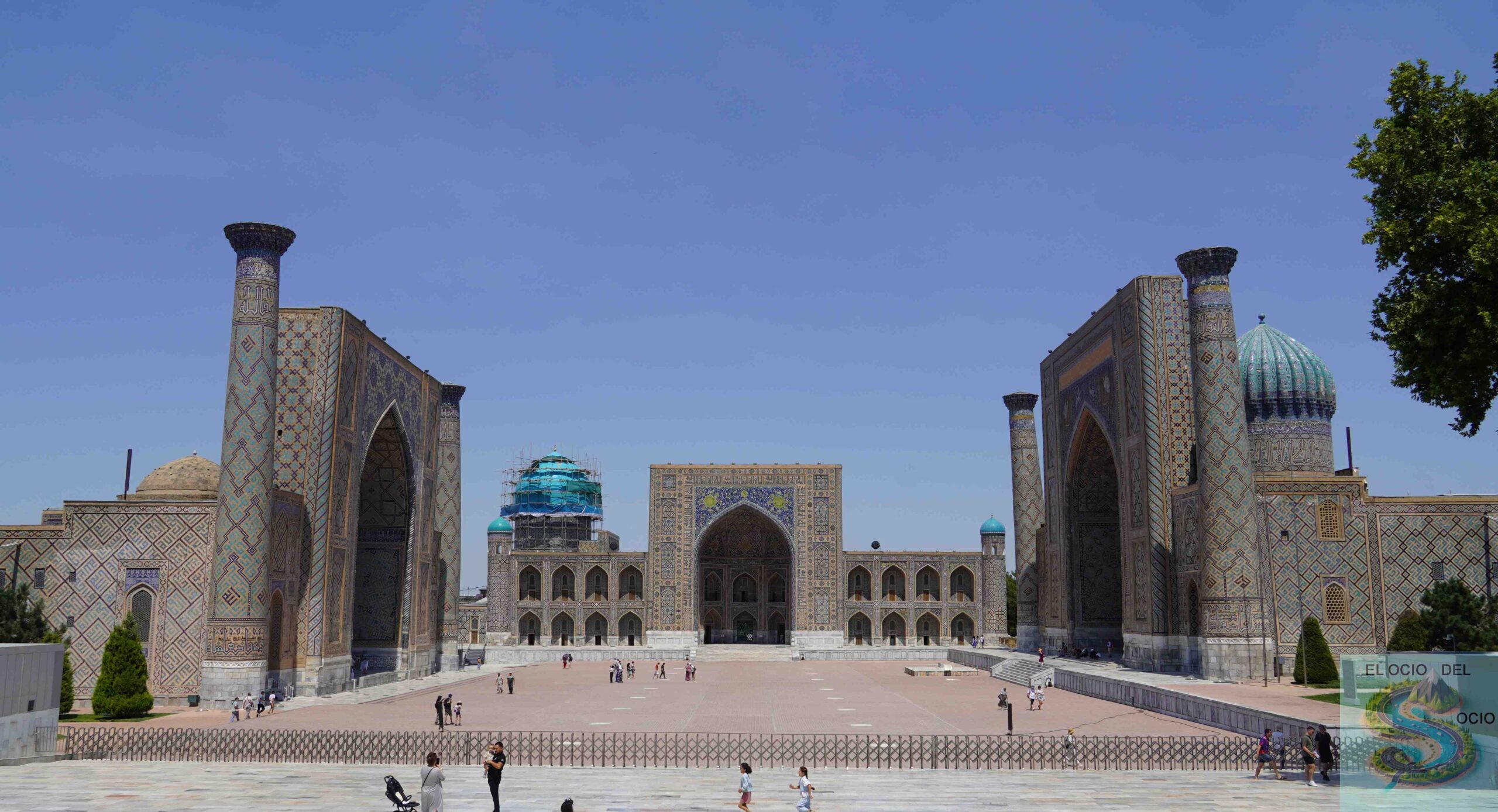
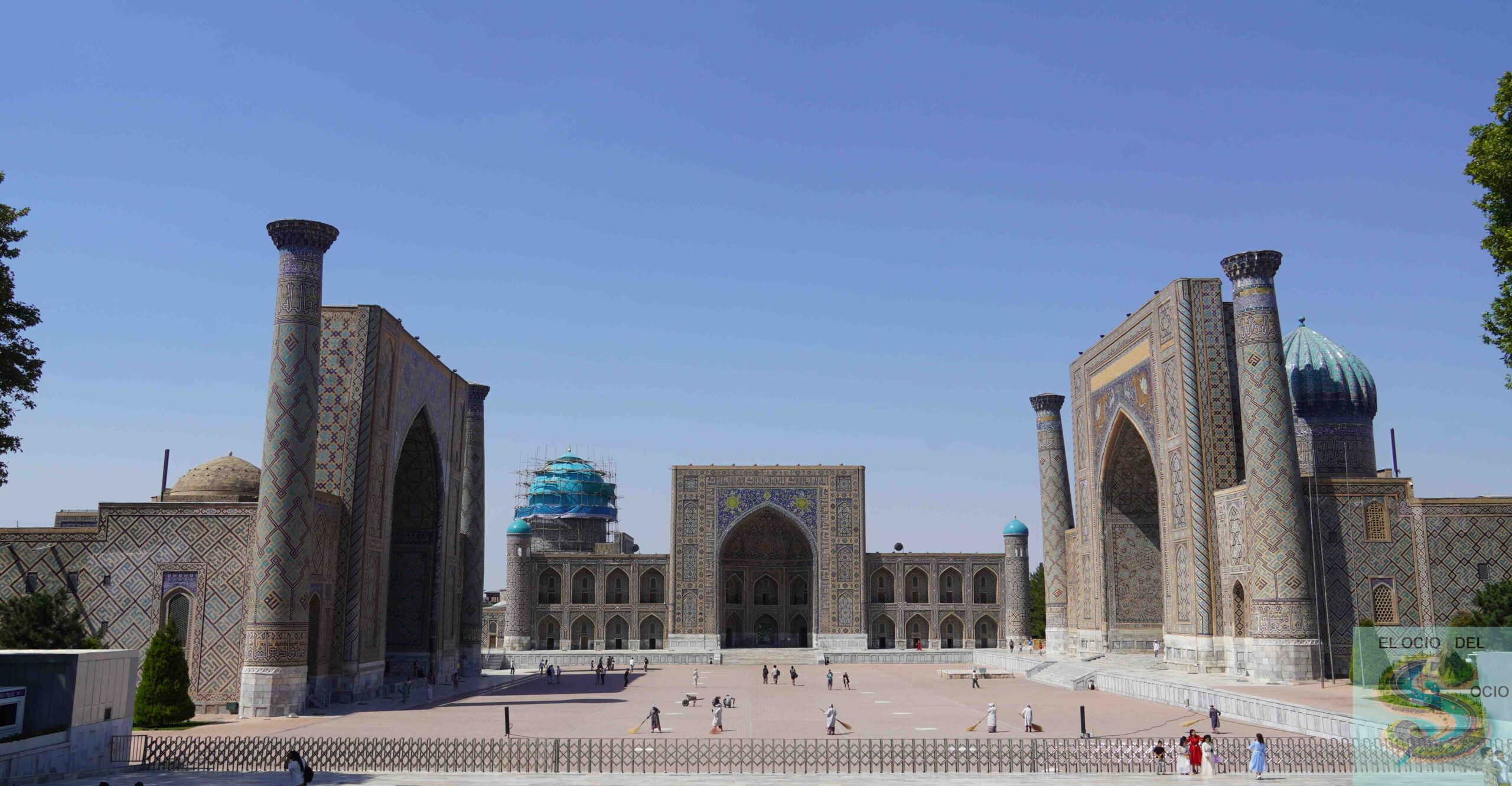
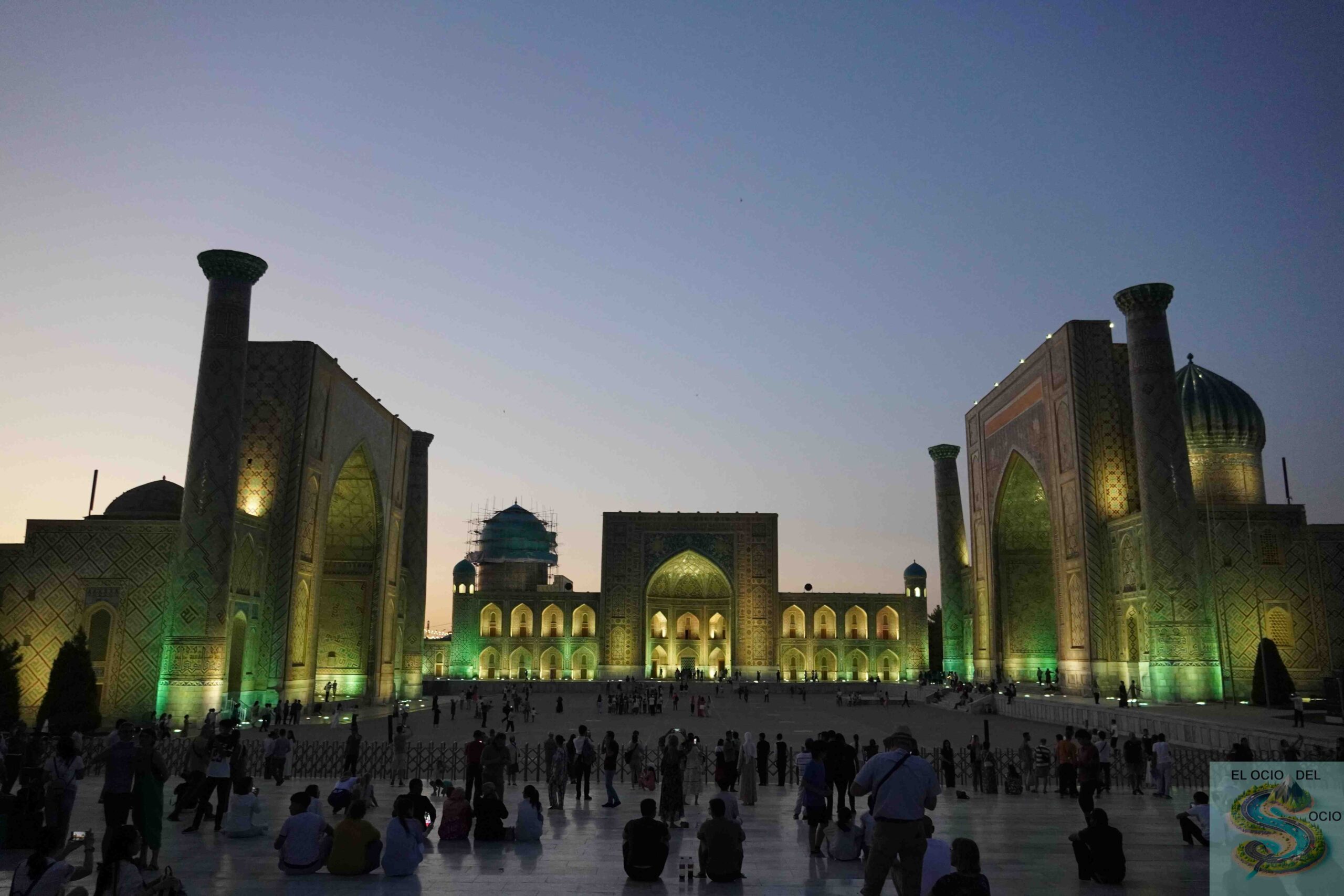
The Registan Square is the most iconic monumental set in the country and one of the most photographed places in Central Asia. It is made up of three historical madrasas: Ulugh Beg, Sher-Dor and Tilla-Kori. Its architecture of tiles and restored domes will transport you to the time of Tamerlán. It is recommended to visit it both day and night, when the lighting makes it a sea of lights due to the night show they perform.
In this video of our TikTok you can see some of the highlights of the night show. Once dark, the lights turn on. A few minutes later, a night light show begins, where the lights turn on and off following a melody. Later, there is a pause of a few minutes and another light show begins, but this time with the projection of images or video mapping, which is what is shown in the next video.
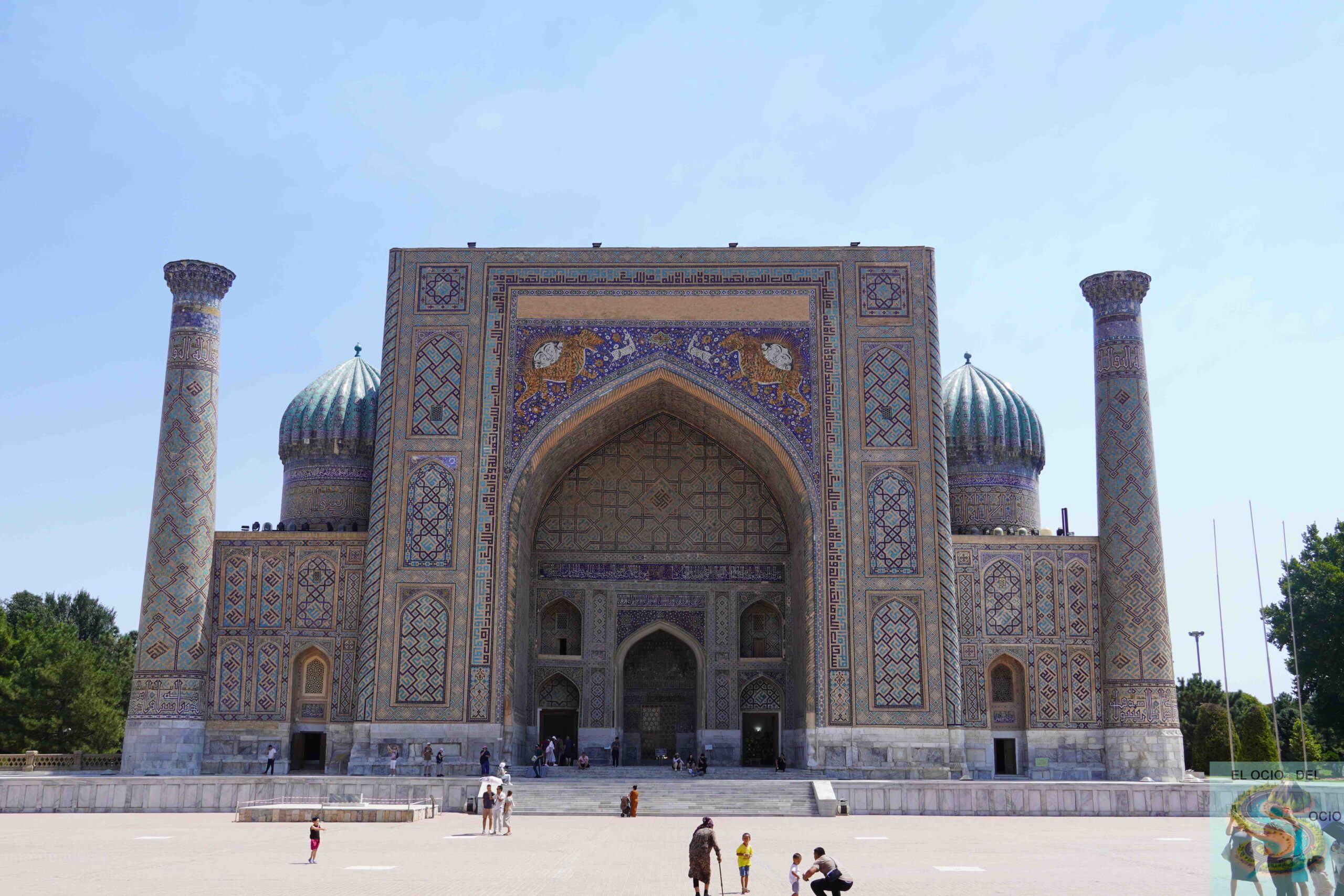
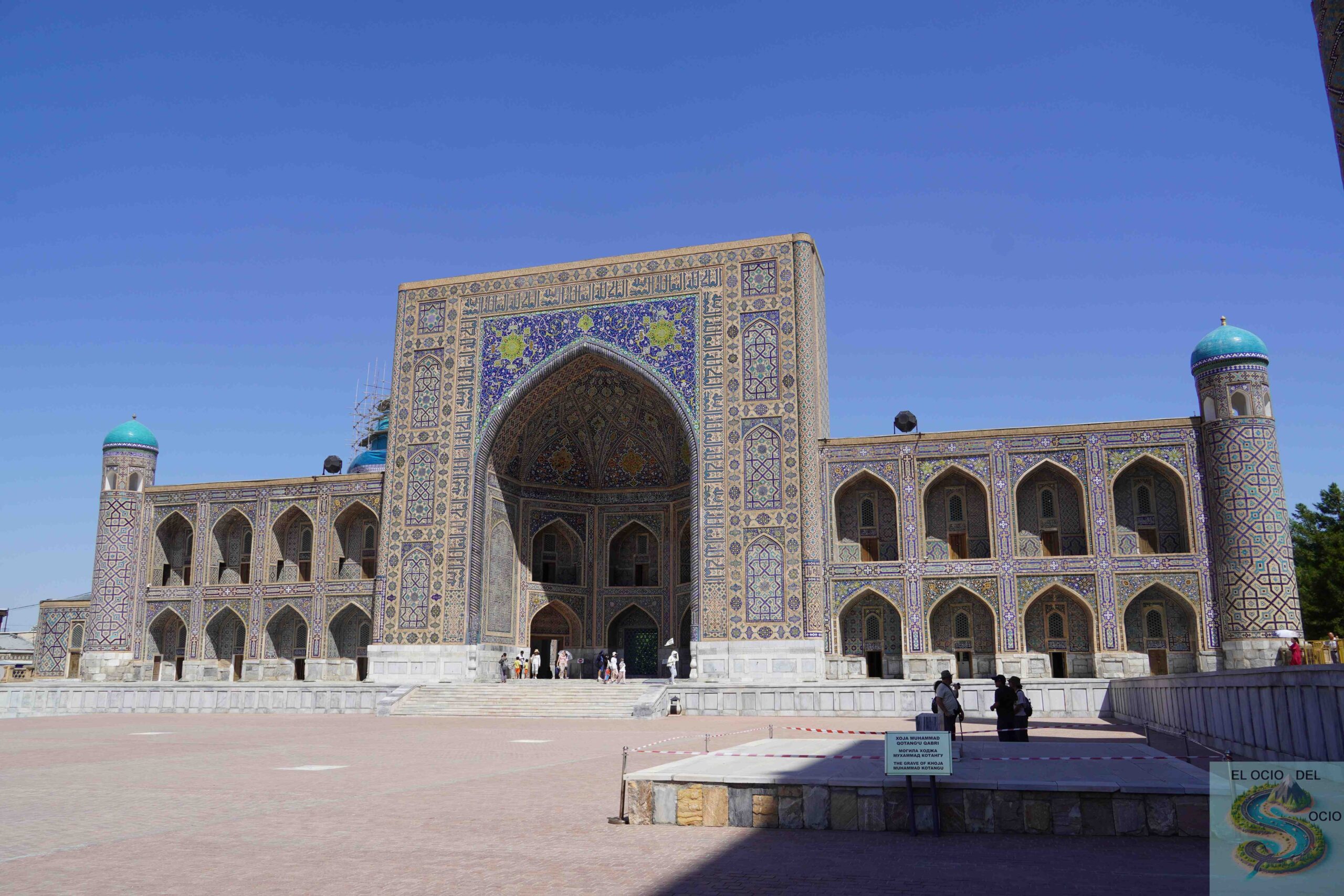
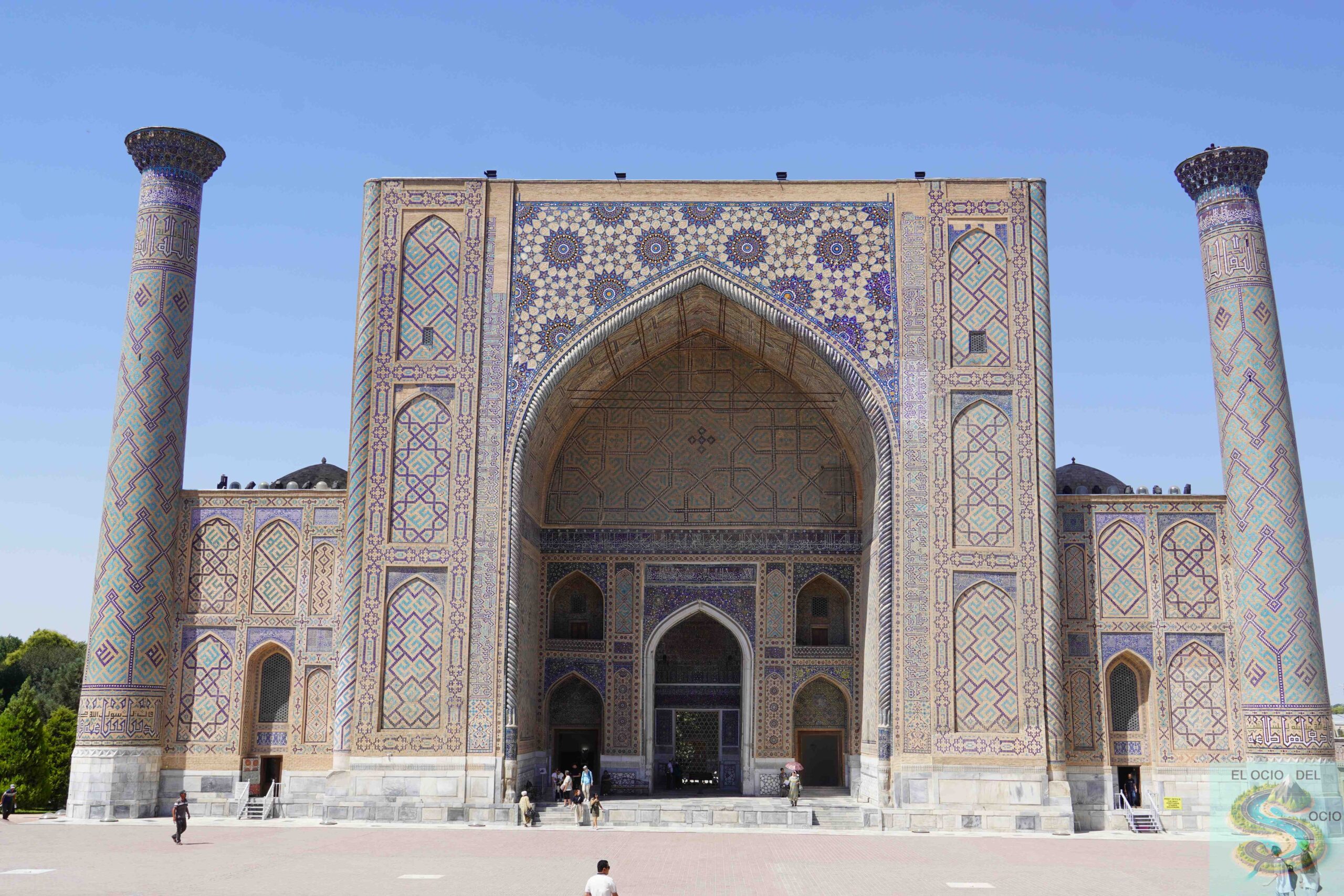
This square is undoubtedly the most impressive and photographed architectural complex in Uzbekistan. It is composed of three majestic madrasas (Islamic schools):
- The Mature of Ulugbek:Built in the 15th century by the grandson of Tamerlán, the famous astronomer Ulugbek, this madrama was at the time one of the most important universities in the Islamic world. Look at the beautiful motifs of stars on its facade, a tribute to its founder.
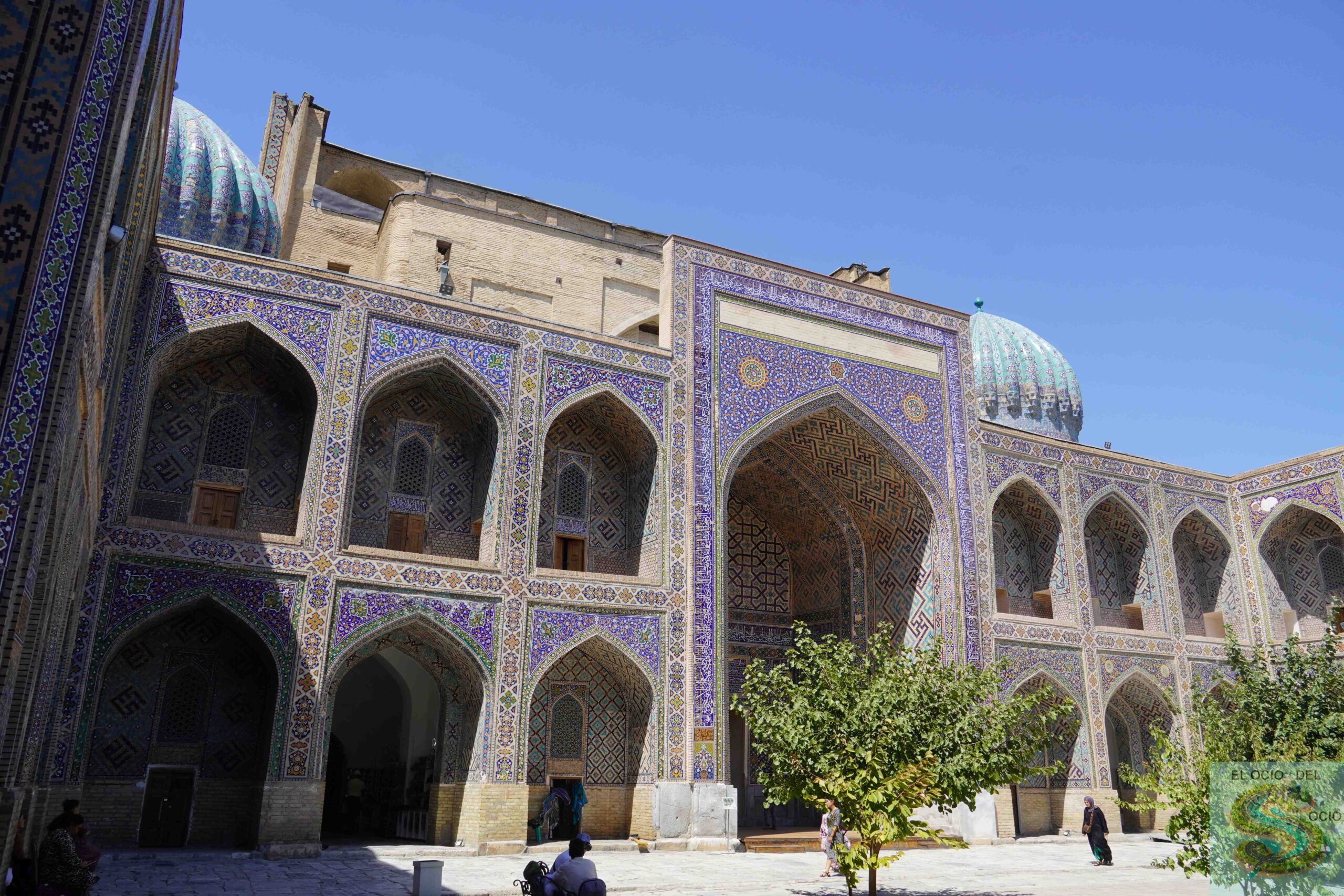
- The Mature of Sher Dor:In front of Ulugbek’s, this 17th-century madrama is famous for the mosaics of its portal, which represent lions (or tigers, according to the interpretation) carrying a sun on the back, an unusual design in Islamic art.
- Tilya-Kori’s Mature:The last one to be built, its name means “gold cover.” Its main courtyard and mosque are decorated with an impressive amount of gold bread, creating a dazzling effect that will leave you breathless.
Depending on the time you go, you’ll see shadows projected in one or the other.
Bibi-Khanym Mosque
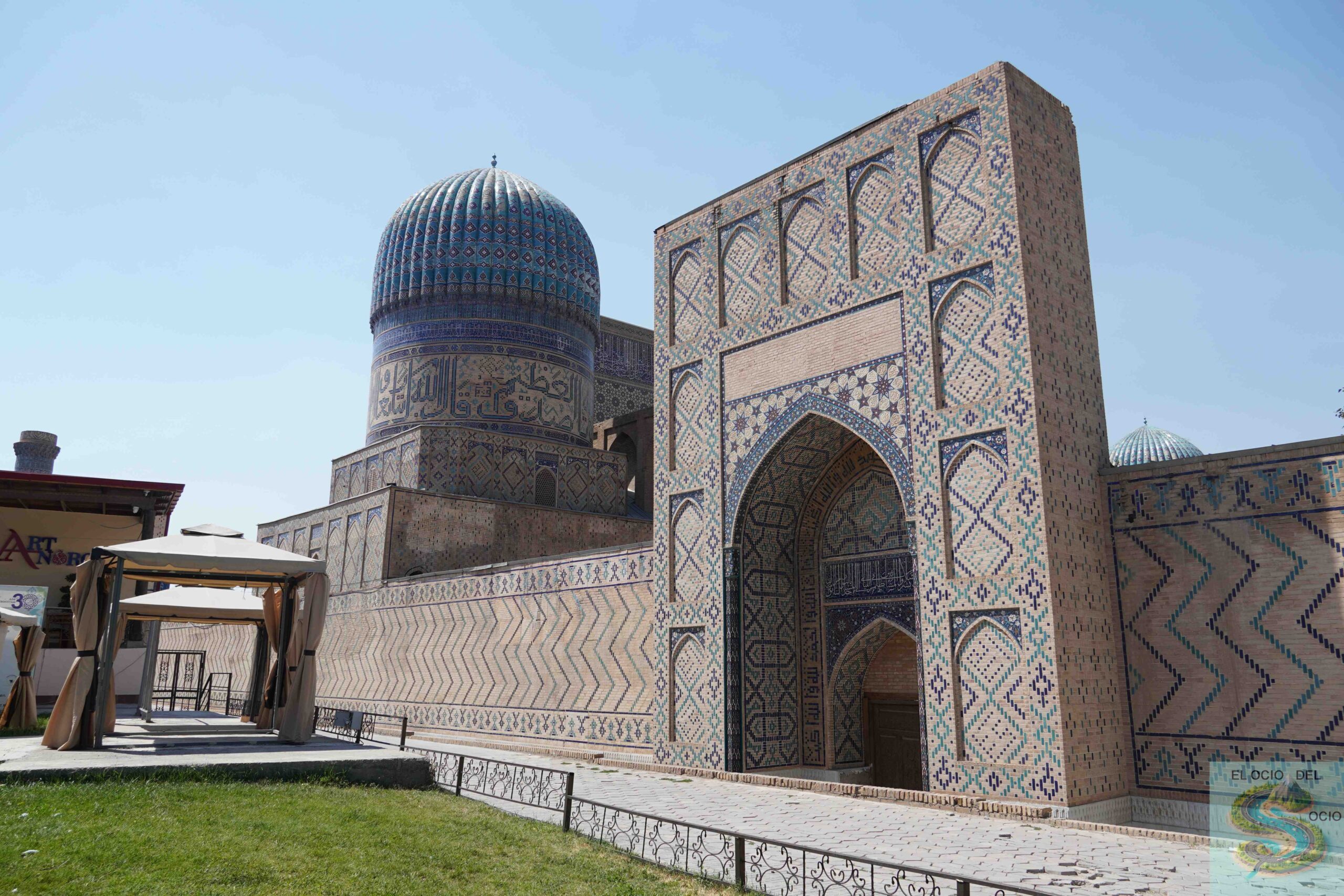
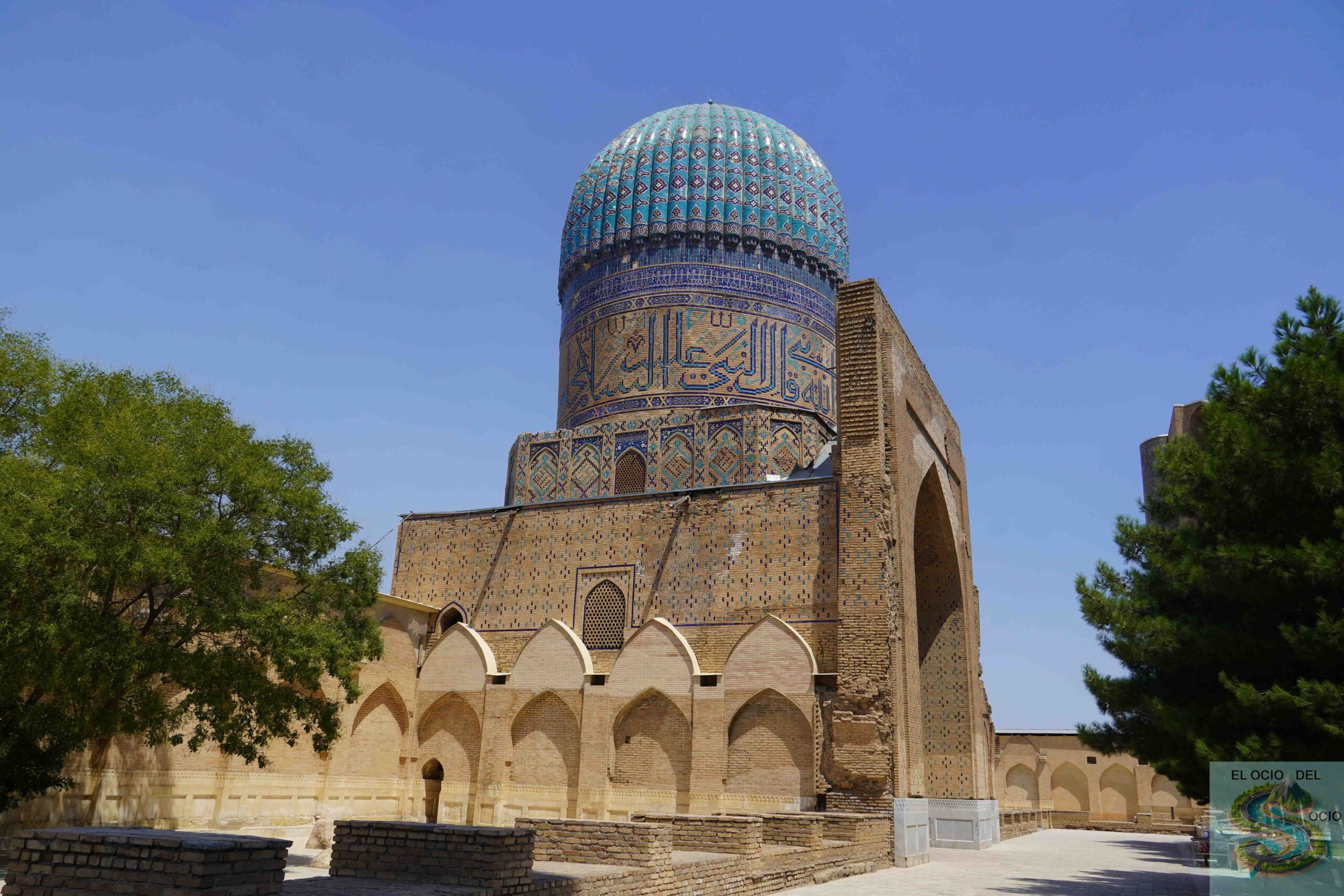
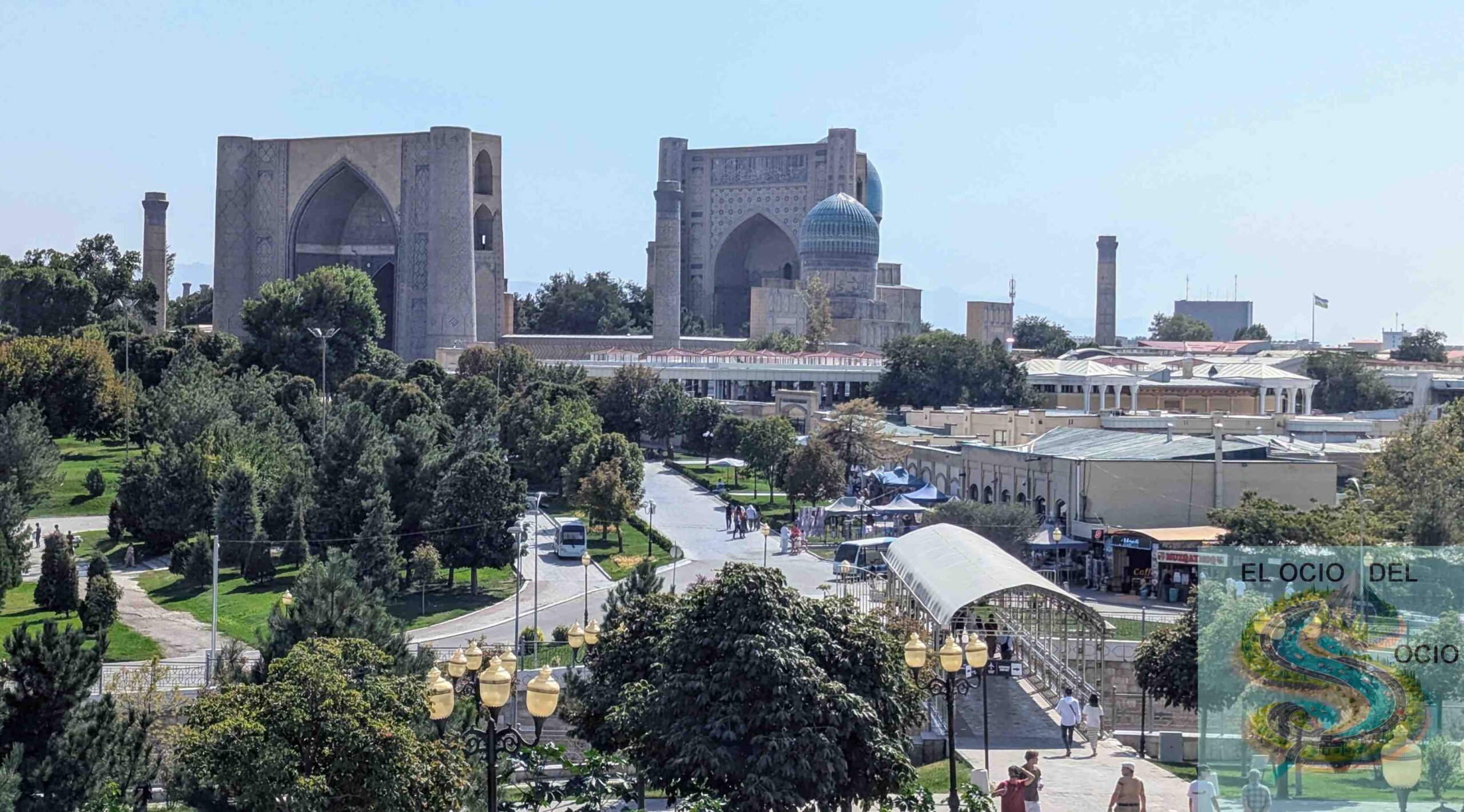
Built in the 15th century, by order of Tamerlán after his campaign in India, this mosque was one of the largest in the Islamic world. Although much of it is in ruins, its imposing entrance and the huge blue dome remain a spectacle to be admired and a symbol of Tamerlan’s ambition.
Bazar Siyob: Local life and gastronomy
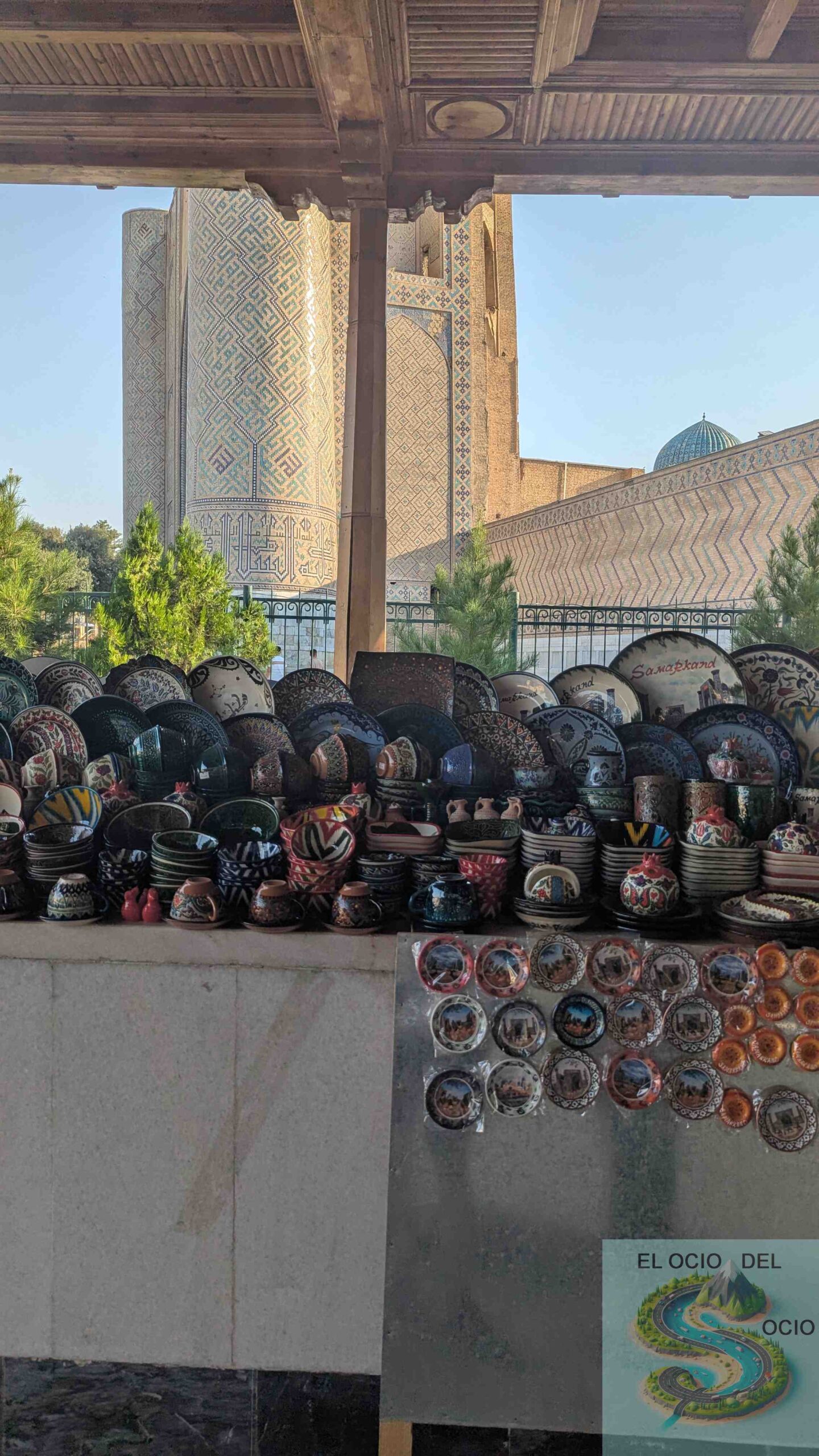
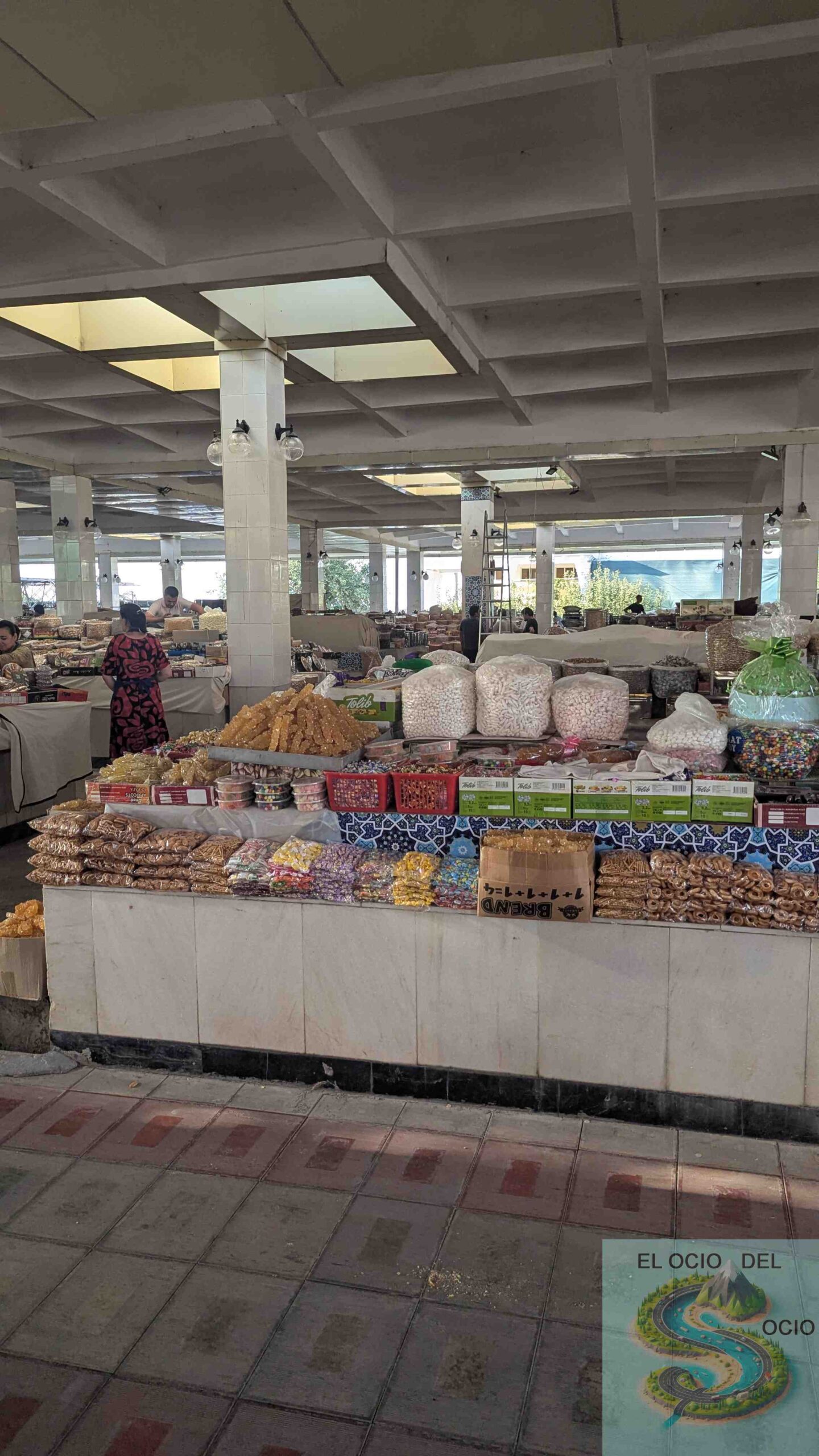
Right next to the Bibi Khanym Mosque, is the Siyob Bazaar, the most popular bazaar in Samarkand. Perfect to try the famous local bread, typical sweets and dried fruits, buy clothes, crafts, etc. It is also the ideal place to pack up daily life, buy spices and experience the Uzbek environment.
Hazrat Khizr Mosque
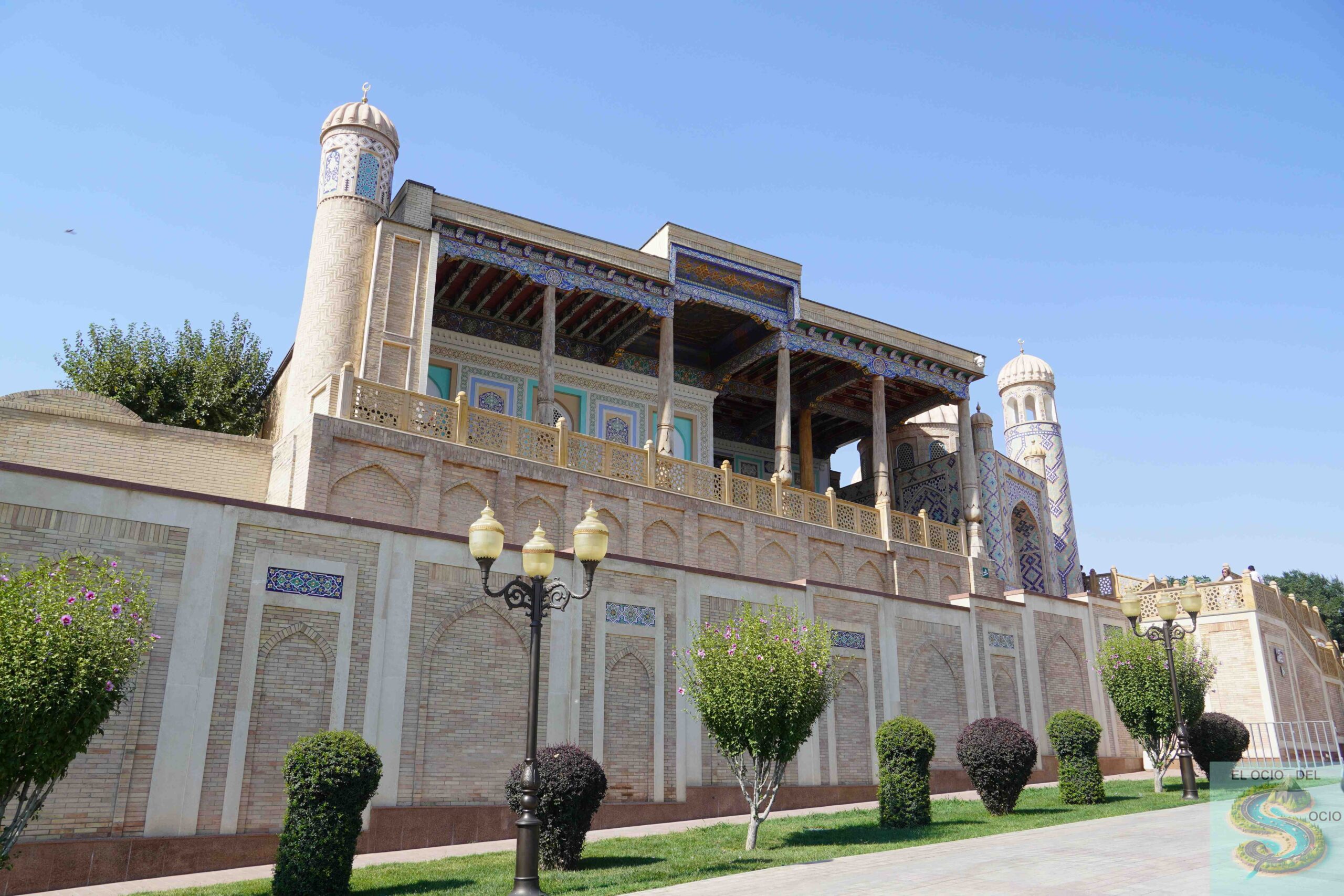
Located on a hill overlooking the city and the Registan, this mosque is one of the oldest in Samarkand, with origins dating back to the 8th century. Reformed several times, the current version dates from the 19th century and is an example of the traditional Uzbek architecture. It offers spectacular panoramic views, ideal to appreciate the magnitude of the city.
Shah-i-Zinda complex
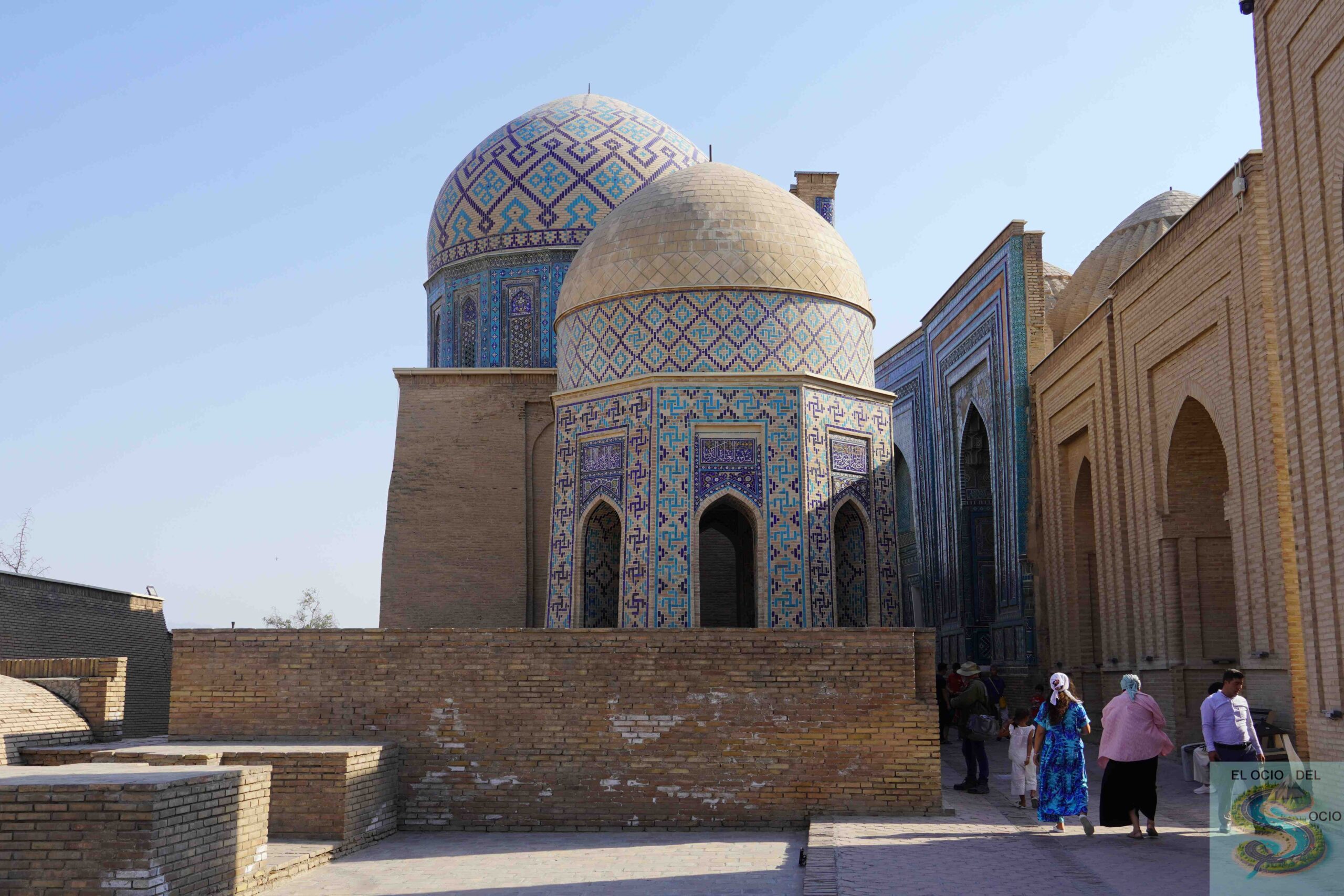
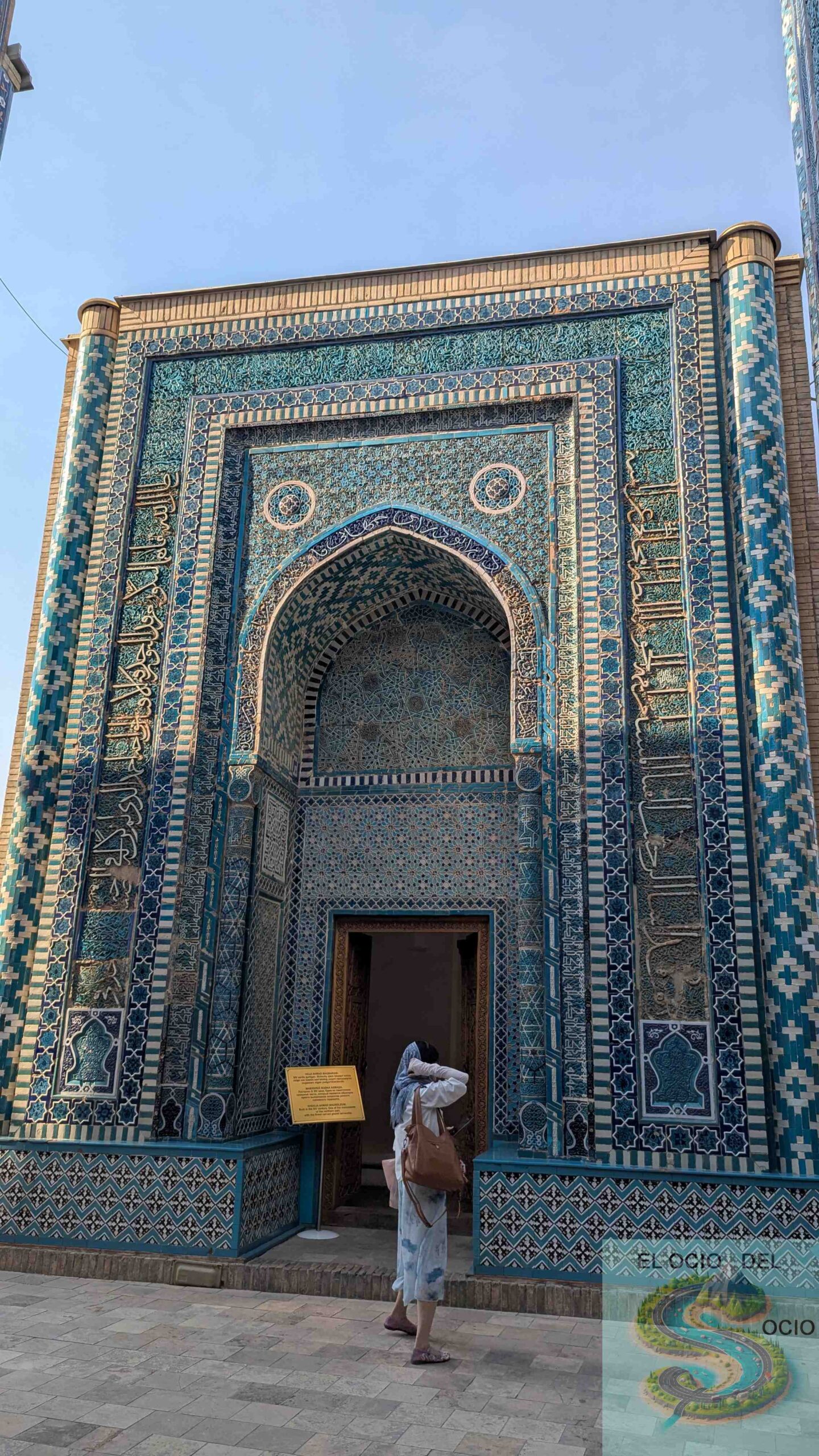
An alley of mausoleums and mosques that transports you in time. Known as the “Avenida de los Sepulcros,” it is one of the most sacred places in the city and the mausoleum of Qusam ibn-Abbas, a cousin of the prophet Muhammad, is here. The beauty of its glazed mayolic and terracotta tiles is simply sublime, offering some of thebest photos of Samarkand.
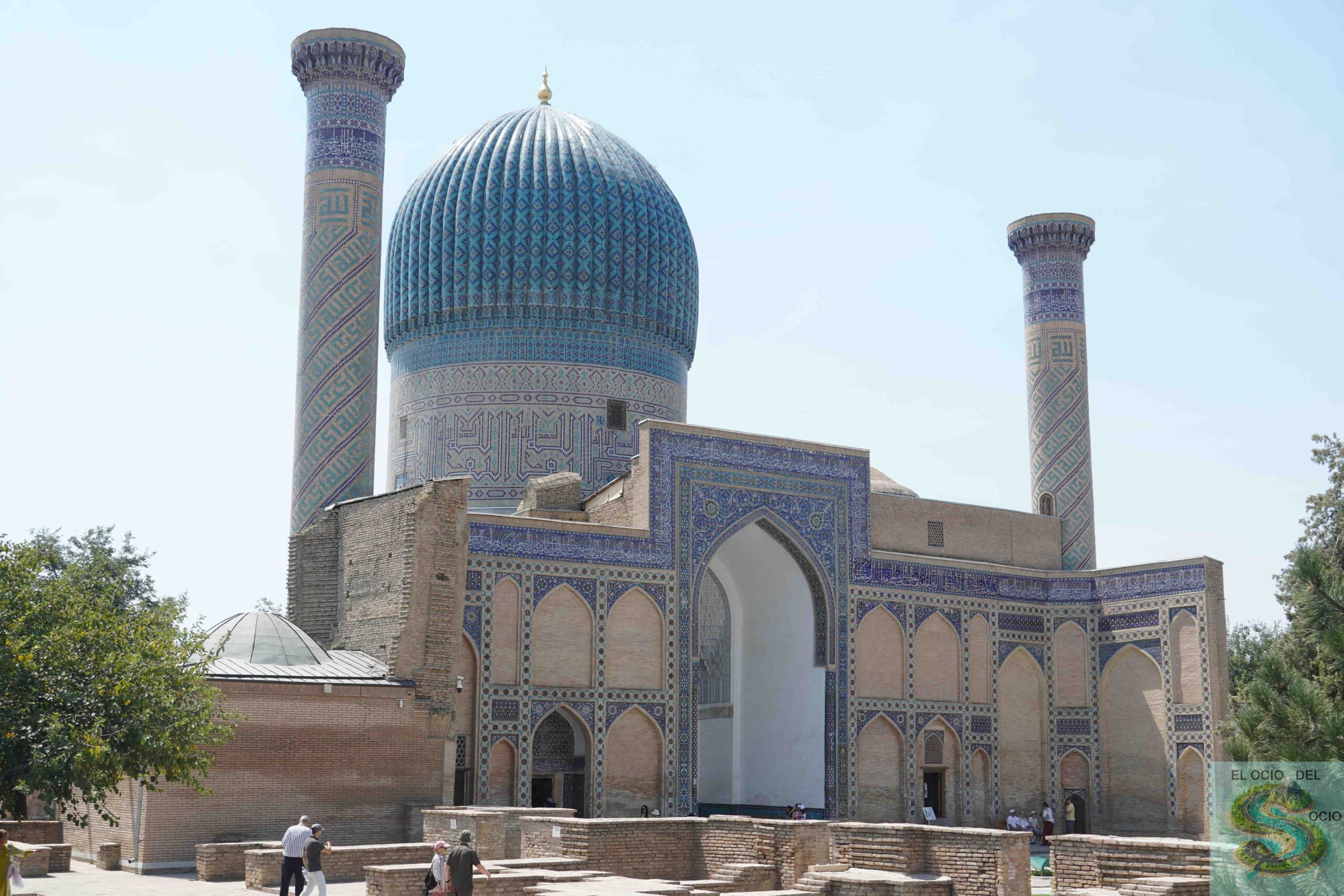
Mausoleum of Gur-e-Amir: The tomb of Tamerlan
This blue dome mausoleum is the final resting place of the legendary conqueror Amir Timur (also known as Tamerlán) and several members of his family, such as Ulugbek. They highlight both the outside of tiles and the luxurious golden interior. The history and legends surrounding the place make it a compulsory stop for cultural lovers.
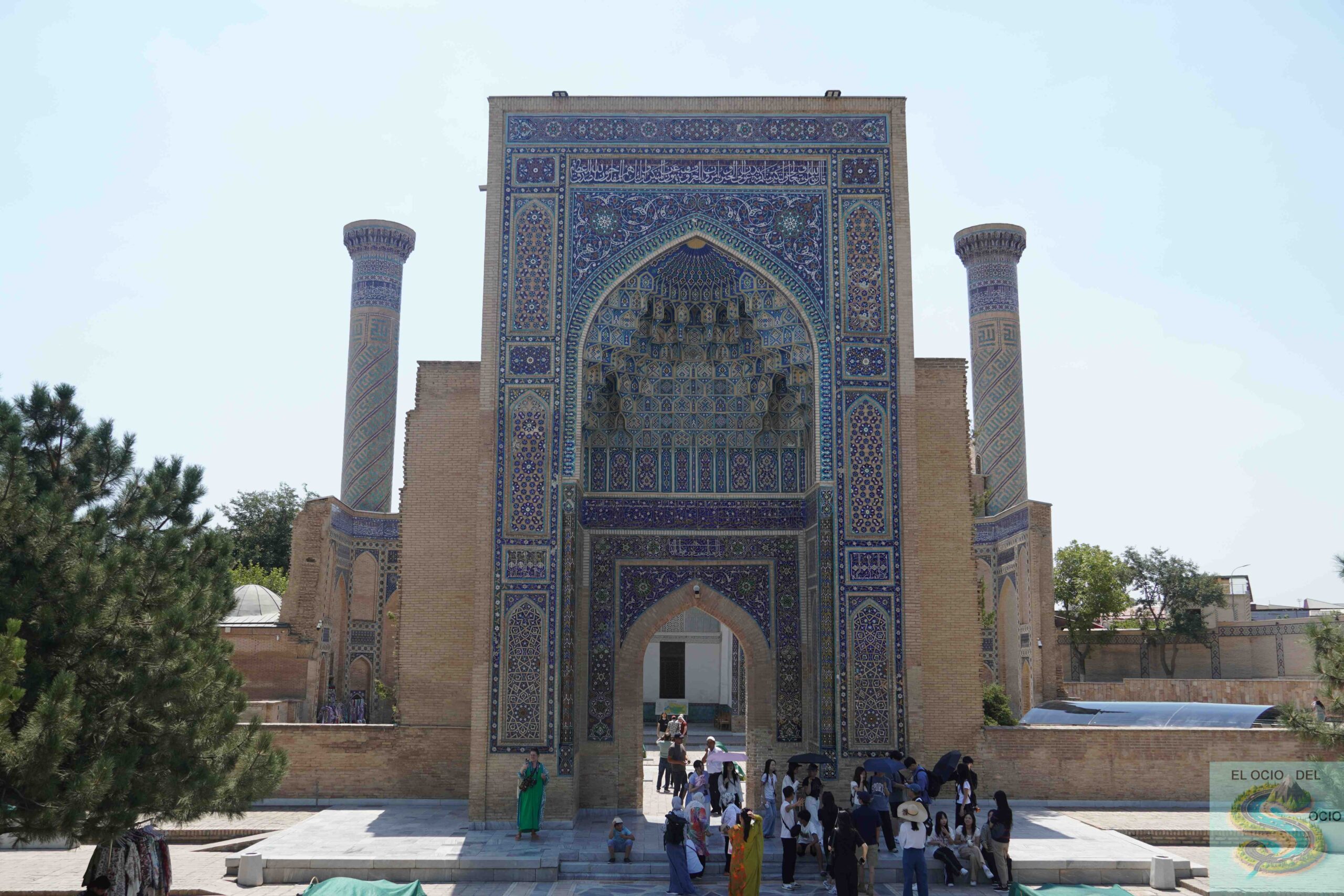
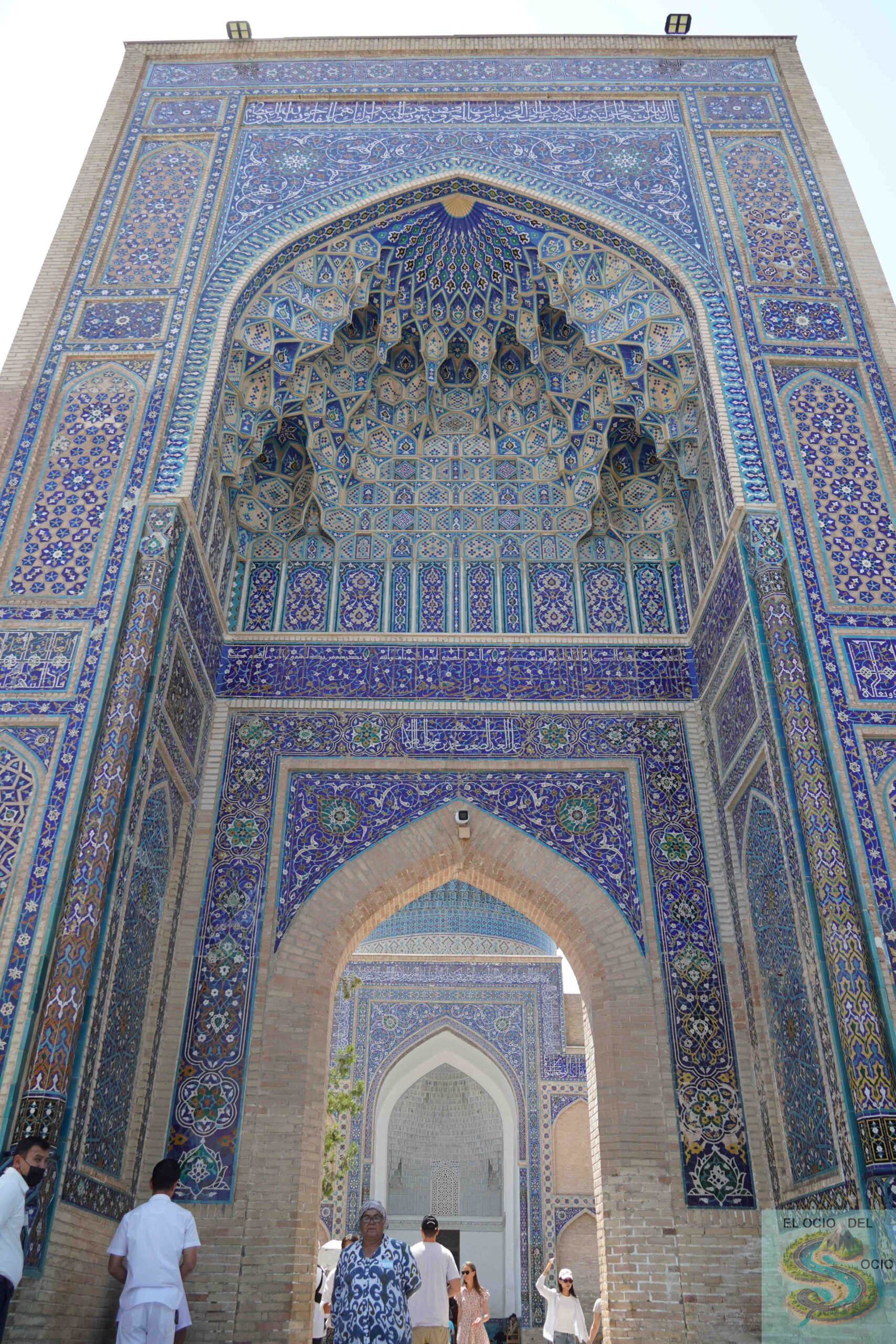
Next to the Mausoleum, there is another mausoleum called Aksaray. While it is small, we entered as we saw comments that it is pretty inside and the man who charges the entrance made us a beautiful video of the interior with our mobile and a photo using the panoramic way in which you see all the inside and us perfectly framed.
Mausoleum Aksaray
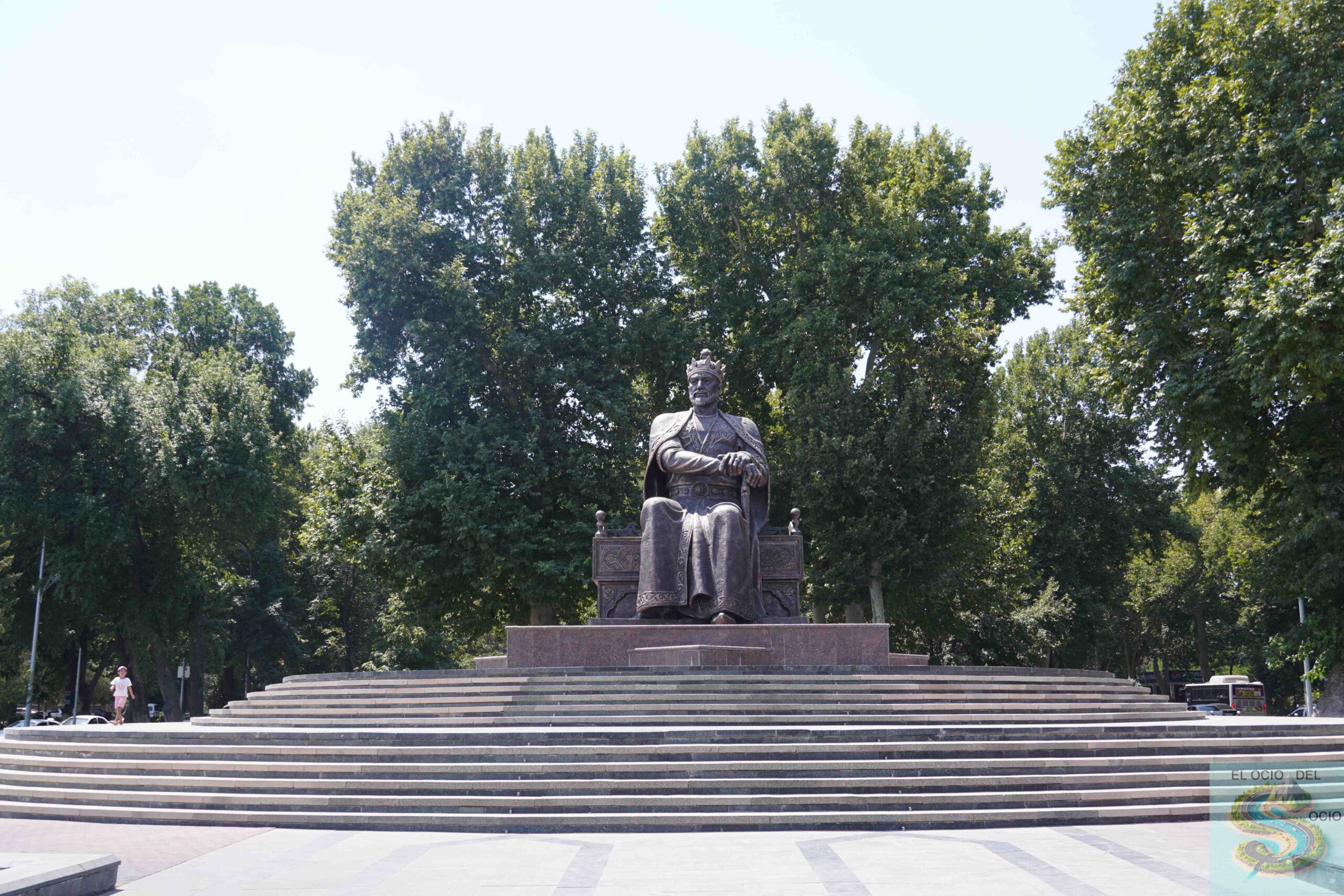
Statue of Amir Timur
Near both mausoleos is the statue of the conqueror Amir Timur.
Ulugh Beg Observatory: medieval science and astronomy
The ruins of the observatory built by the astronomer Ulugh Beg, the grandson of Tamerlán, offer a tour of the scientific history of Central Asia. Here the stars were studied and original instruments continue to be displayed.
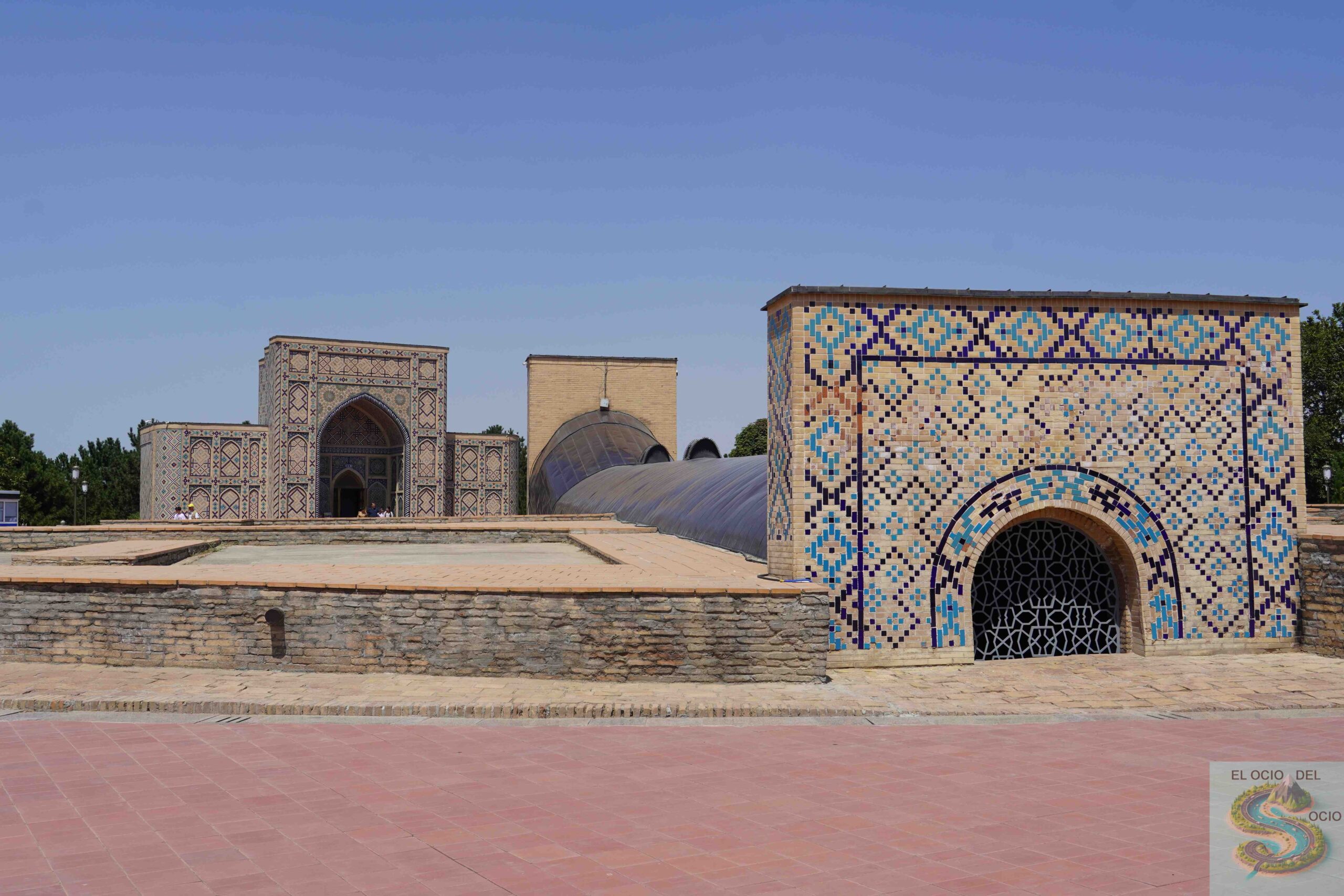
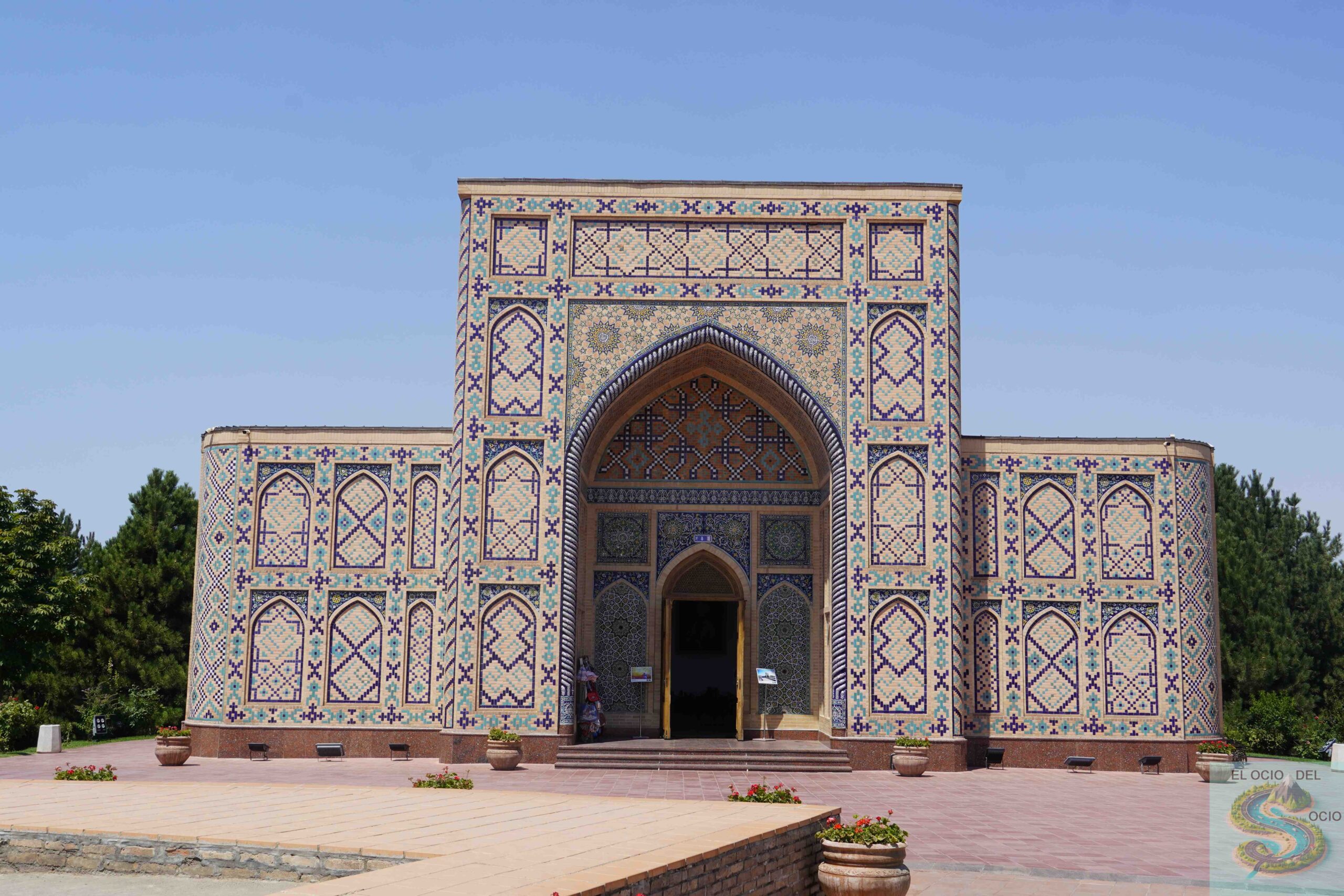
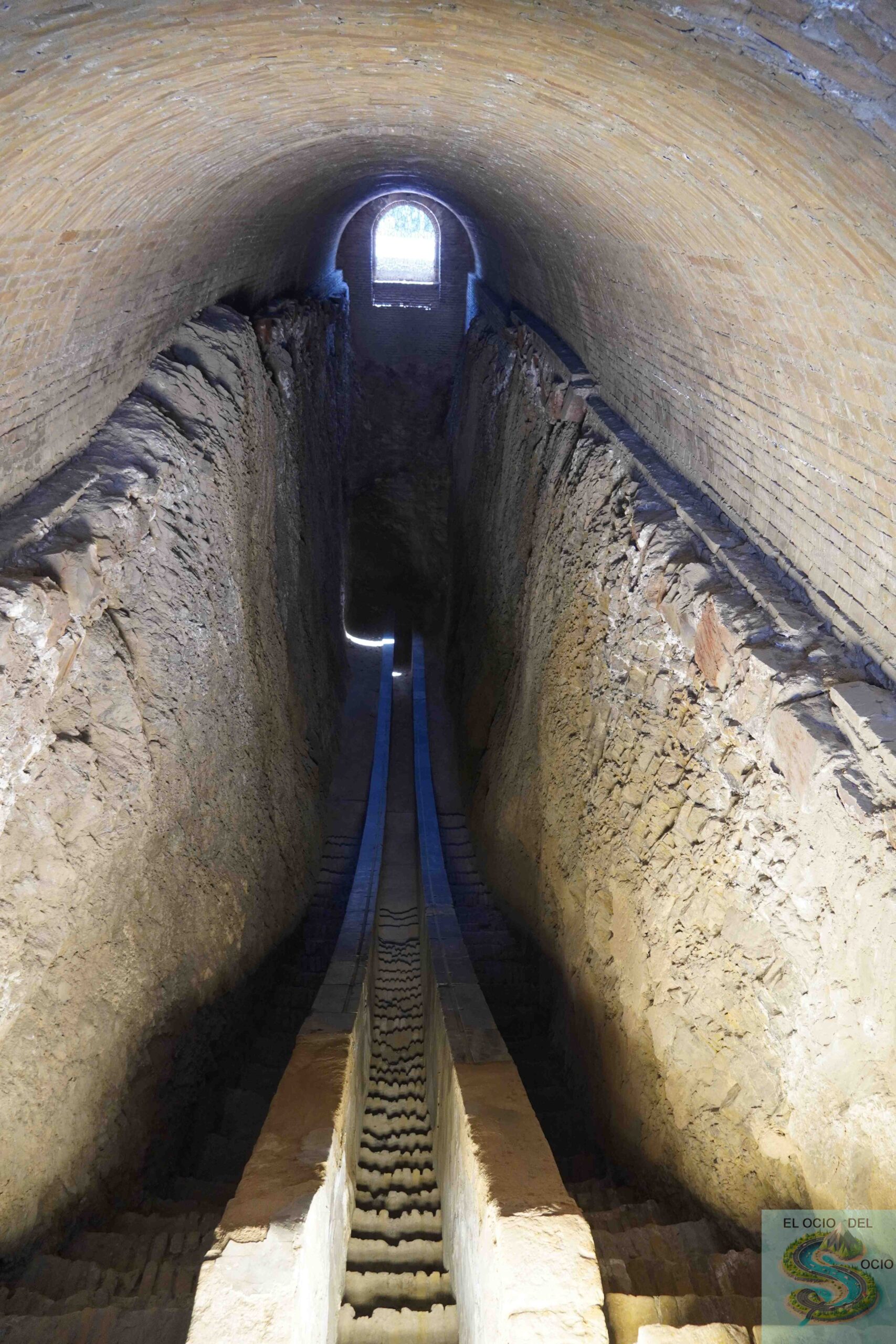
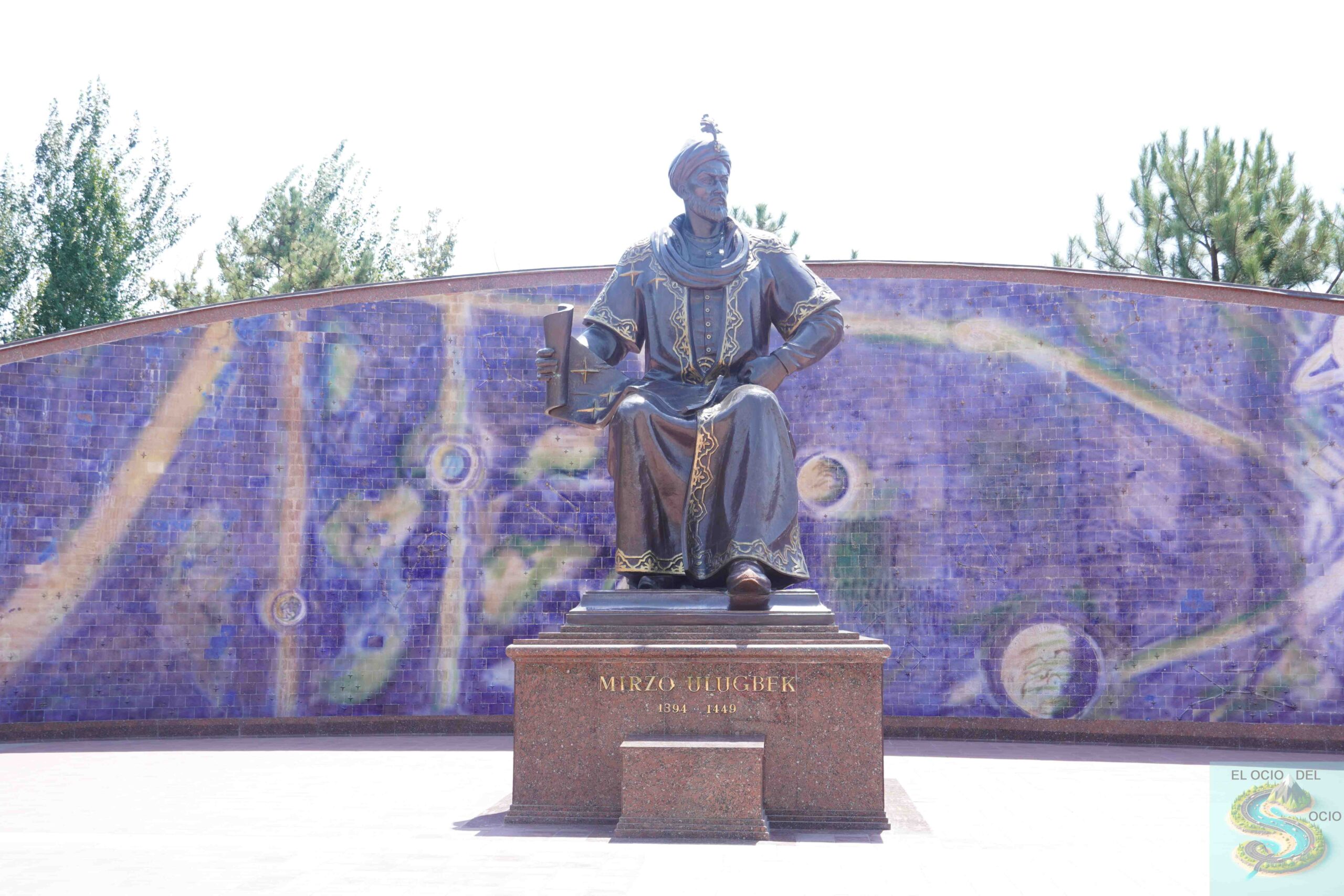
Next to the observatory, down the stairs, is the statue of Ulugbek.
Mausoleum of San Daniel
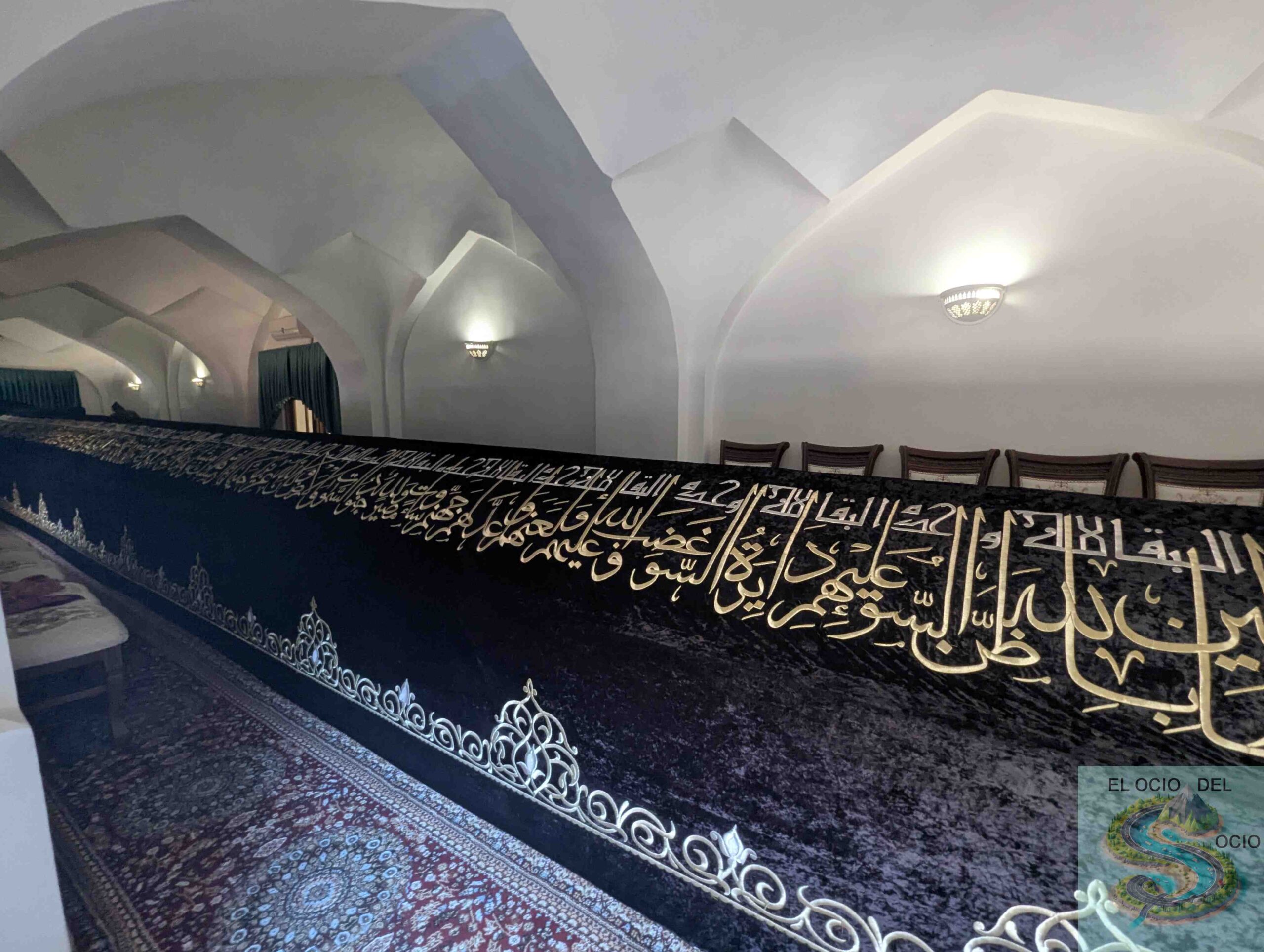
This mausoleum, according to legend, houses the arm of the prophet Daniel (or Daniyar), and is venerated by Muslims, Jews and Christians alike. The tomb is exceptionally long, with about 18 meters, which feeds various legends about the growth of Daniel’s body. A place of pilgrimage and tranquility.
Afrassiab Museum: The Old City
We didn’t go because it’s an archaeological museum and we think we wouldn’t like it since the images we saw were excavations. If you are passionate about archaeology, this museum houses remains of the old settlement of Afrisiab, the original Samarkand. Walk the walls and see what the city was like more than 2,000 years ago.
Practical tips for your visit to Samarkand
- Using Yandex Go to move you, is the equivalent of Uber there.
- The best time to travel is spring and autumn, when the climate is softer. We went in summer, which is when there are fewer people and we went hot but we were glad that we did not meet with crowds. We went in August, as they say July is unbearable.
- Try local cuisine.